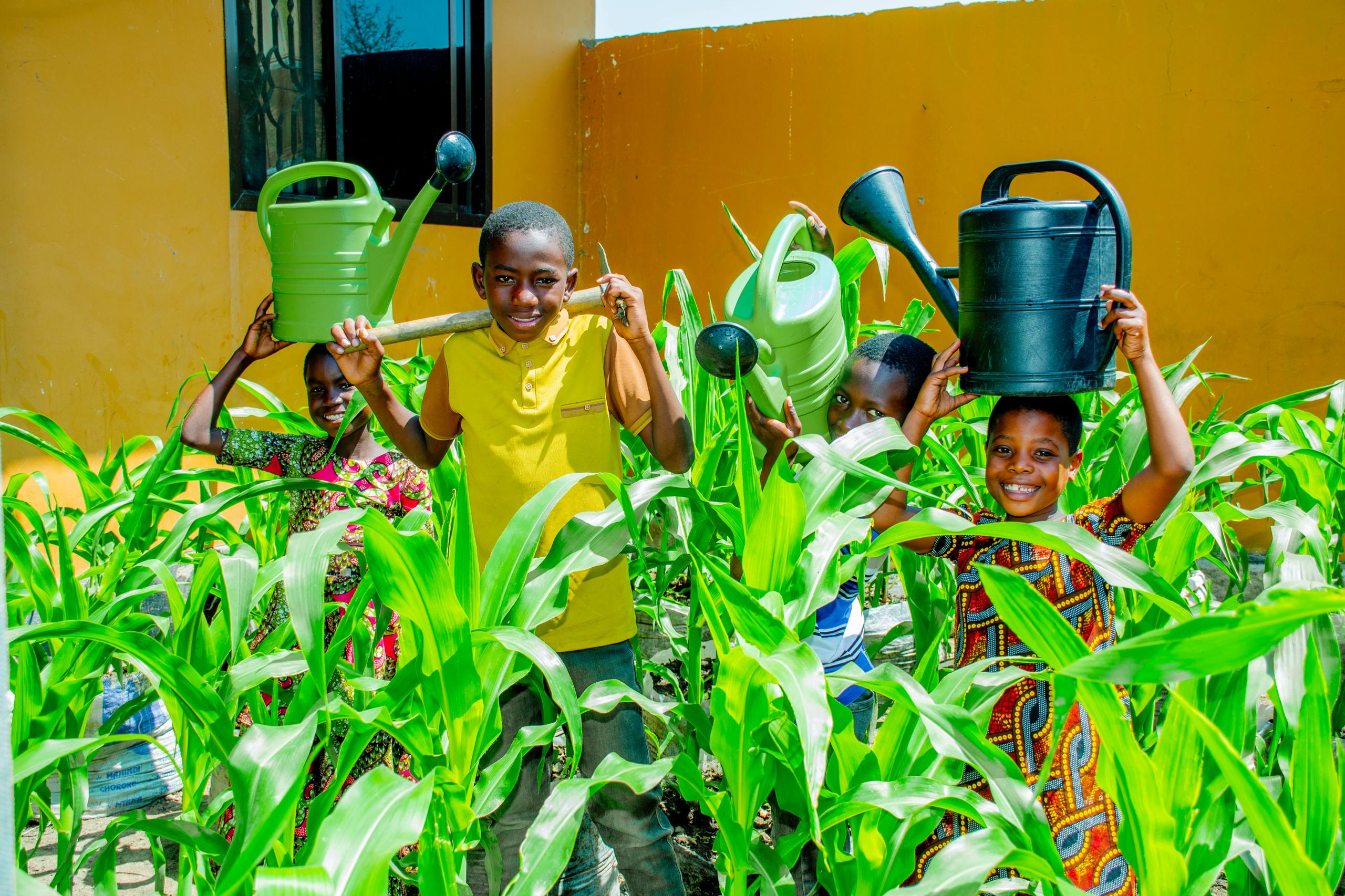
“Agriculture is more than food, it is a life skill”
Project Manager, Rebeka Masalu shares that at Kazunzu Village of Hope, families are thriving in providing nutritional food and important life skills to their children.
The past 12 months have brought a continued strengthening of the agricultural projects at Kazunzu. In addition to using good agronomic practices, precision planting, and the use of improved seeds, families recently began planting cover crops to rejuvenate the soil and practicing intercropping to retain fertility. Their efforts brought positive results, with maize production increasing significantly and families harvesting between 800 kg and 3,000 kg per household.
Today, every family is food secure thanks to the establishment of maize production. Additionally, many are cultivating rice this season. For the children, this means stable meals, better nutrition, and the comfort of knowing there is food in the home. With increased harvests came a new responsibility: proper storage. In April, families received training on post-harvest handling to prevent losses and protect their hard work. They learned how to dry, preserve, and store grain properly and were introduced to PICS (Purdue Improved Crop Storage) bags. These hermetically sealed bags protect maize from pests such as weevils without the need for chemicals.
Crop diversification has also transformed family nutrition. Mother, Epifania introduced bio-fortified sweet potato seedlings to planting. “This cultivation has done wonders for us. The sweet potatoes are not only healthy but versatile. I can boil them for breakfast, make flour, or even mix it with wheat to prepare pancakes, my children’s favorite. The sweet potatoes and cassava have reduced our food expenses. We now eat better and spend less” she added. Enos Busambala believes in passing these lessons to his children: “Agriculture is more than food, it is a life skill. We want our children to understand the value of hard work and sustainability.”
The combination of improved farming practices and accessible medical care has strengthened the entire Kazunzu community. In the coming months, focus will also be given to further improving water access as well as providing the families with opportunities to expand the variety of income-generating projects to support themselves and the village as a whole